It’s Monday morning, June 2026. You walk into the office, grab your coffee, and nod hello to your coworker, Alex. Alex is six feet tall, remarkably efficient, never complains about the temperature, and happens to be made of reinforced carbon fiber and high-torque actuators.
Humanoid robots are no longer the exclusive residents of research labs or high-budget sci-fi movies. They’ve punched the clock and entered European warehouses, hospitals, logistics hubs, and retail floors. But in the EU and wider EEA, these machines don’t just bring productivity gains. They arrive carrying a suitcase full of conformity assessments, technical files, data governance questions, and enough cross-referenced legal obligations to make even a seasoned compliance lead reach for a stronger coffee.
The reality of 2026 is simple: Your new colleague doesn't just need a desk; they need a CE strategy, a GDPR position, and probably a Data Processing Agreement (DPA).
Navigating the intersection of physical safety and digital privacy is the new frontier of risk management. In Europe, understanding the "Robot in the Room" means understanding something more specific: the Dual Regulation Burden created by overlapping machinery, AI, and data protection rules. Welcome to the Fortress Europe edition of robotics compliance.
1. The Dual Identity: Machine vs. Data Processor
In the eyes of European law, a humanoid robot is a bit like a platypus with a legal department: it doesn’t fit into one neat category. In 2026, EU and EEA organizations have to evaluate these systems through two distinct regulatory lenses at the same time.
The Physical Machine (Machinery Directive Today, Machinery Regulation Tomorrow)
First and foremost, a robot is a machine: a physical system capable of movement, force, collision, and harm if things go wrong. In the European context, that means conformity with the Machinery Directive 2006/42/EC today, with a very important countdown already underway toward the EU Machinery Regulation (2023/1230), which becomes fully applicable in January 2027.
That transition matters. The new Regulation is not just a tidy legal refresh. It is much more explicit about digitalized machinery, software-related safety functions, and the role of AI-based safety components in determining whether a machine can be safely placed on the EU market. In other words: Europe is no longer treating software in machines as a side note scribbled in the margins.
For manufacturers, importers, and deployers, this means CE marking, technical documentation, risk assessment, and evidence against harmonized EN standards are not optional admin chores. They are the entry ticket.
But physical safety is only half the story. If the robot bumps into a worker, that’s a machinery and workplace safety problem. If the robot identifies, profiles, or continuously observes that worker, that’s a second legal problem arriving right behind the first one with a separate checklist.
The Data-Processing AI (AI Act & GDPR)
This is where Europe gets particularly European. A humanoid robot is also a mobile sensor platform: part machine, part software stack, part roaming compliance incident waiting to happen. Cameras, microphones, proximity sensors, telemetry, environmental mapping, remote diagnostics, and possibly biometric functions all sit under the glare of GDPR. If AI functionality influences safety behavior, worker interaction, or decision support, the EU AI Act joins the party too.
This overlap is what we mean by the Dual Regulation Burden. In many other regions, physical product safety, AI governance, and privacy obligations are more fragmented, less integrated, or less prescriptive. In the EU/EEA, the opposite is true. Europe has effectively built a regulatory fortress where a humanoid robot may need to satisfy product safety law, AI governance law, radio/electrical rules, and data protection law in a coordinated way.
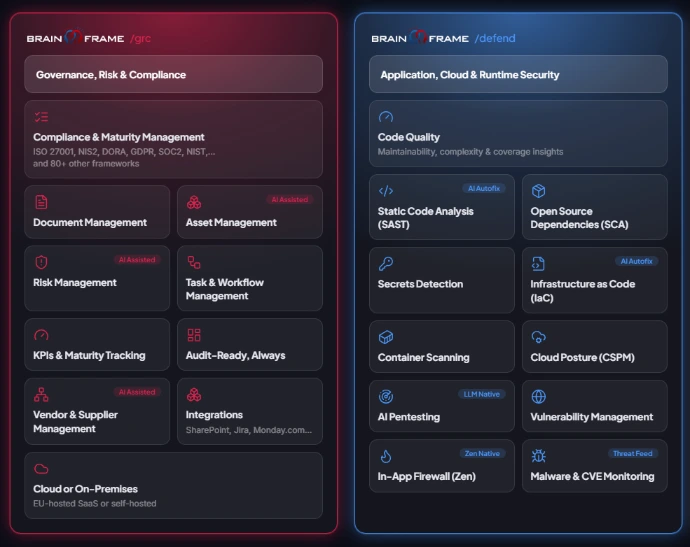
Managing this dual identity requires a unified GRC platform that can track both physical maintenance logs and digital privacy impact assessments in one place. Tool fragmentation is the enemy here; you can’t manage a robot’s CE evidence in one spreadsheet and its AI compliance in another.

2. The Privacy Challenge: Cameras, Mics, and the Biometric Trap
Humanoid robots perceive the world through a suite of sensors that would make a spy agency jealous. While those sensors are necessary to avoid tripping over a trash can, a pallet jack, or Bernard from procurement, they are also a direct collision point with European privacy law.
The GDPR Shadow
Under GDPR, any image, audio, identifier, or telemetry element relating to an identifiable natural person can become personal data. If your robot is navigating a warehouse in Belgium, a clinic in the Netherlands, or a logistics site in Germany, every face, voice, badge, workstation pattern, or behavioral trace it captures may fall into scope.
And European regulators have not exactly taken a "no storage, no problem" approach. Even when video is processed transiently for navigation, obstacle detection, or safety analysis, the act of collecting, interpreting, and acting on that information can still qualify as processing. In classic EU fashion, the law is less impressed by technical optimism than by documented accountability.
The Biometric Minefield, EU Edition
If your robot uses facial recognition, gait analysis, voice identification, emotion inference, or any other function that uniquely identifies or categorizes people, you are no longer dealing with generic telemetry. You may be dealing with special category data under GDPR, along with stricter necessity, proportionality, and lawful basis questions.
That is one of the uniquely European challenges. The EU approach does not just ask, "Can the technology do this?" It asks, "Should it do this, on what legal basis, with what safeguards, and can you prove the answer in writing six months from now?"
The Privacy Fix:
- Data Minimization: Only activate the sensors and analytics genuinely required for the task.
- Edge Processing: Process data locally where possible and avoid unnecessary transmission to vendor clouds.
- Pseudonymization and Masking: Use face blurring, audio suppression, and event-based storage controls before data leaves the robot’s active memory path.
- Purpose Limitation: Do not let safety navigation quietly evolve into worker monitoring by accident or by "feature update."
- DPIA is Mandatory in Practice: A Data Protection Impact Assessment is not a decorative PDF. For humanoid robotics in the EU/EEA, it is usually one of the first artifacts regulators will expect to see.
3. The European Challenge: The Dual Regulation Burden
As of 2026, the big European story is not just that humanoid robots can be regulated. It is that they can be regulated from multiple directions at once, in a coordinated and fairly uncompromising way.
This is the Dual Regulation Burden: the overlap between the EU AI Act and the Machinery framework, layered on top of GDPR and, depending on the design, other CE-related legislation such as RED, EMC, and LVD. For a manufacturer, that means the robot is not merely a product. It is a product, a software-enabled safety system, a data processing environment, and potentially a high-risk AI system bundled into one expensive walking proof-of-concept.
Why Europe is Harder Than "Ship Fast and Fix Later"
Compared with the US or China, the EU/EEA approach is more integrated and more prescriptive. In more fragmented systems, product safety, AI governance, and privacy may sit in separate silos with uneven enforcement. In Europe, the expectation is increasingly that these obligations line up coherently.
That creates a serious hurdle for humanoid robot manufacturers:
- The machine must be safe as a machine.
- The AI must be governed as AI.
- The data must be handled lawfully as personal data.
- The evidence must be documented well enough to survive regulatory scrutiny.
That is not just compliance overhead. It directly affects engineering design, release cycles, post-market monitoring, documentation quality, and go-to-market speed.
Why the 2027 Machinery Transition Matters
The transition from the Machinery Directive 2006/42/EC to the Machinery Regulation (EU) 2023/1230, fully applicable from January 2027, is especially important for advanced robotics. The new Regulation is more explicit about digital and connected machinery, substantial modifications, and safety components with software logic, including AI-based safety functions.
So if a humanoid uses AI in ways that affect obstacle avoidance, movement control, human detection, or other safety-relevant behavior, the compliance conversation becomes much more demanding. You are no longer just documenting a mechanical device with sensors bolted on. You are documenting an adaptive system whose software can influence physical risk.
What the European burden looks like in practice:
- Human Oversight: Operators must be able to intervene, stop, and safely recover the system.
- Transparency: The organization must be able to explain what the robot senses, why it processes data, and what safeguards apply.
- Risk Management: You need a continuous risk management process that evaluates both physical harm and rights-based harm.
- Conformity Evidence: Technical files, CE evidence, DPIAs, logs, instructions, and change records all need to tell the same story.
- Post-Market Discipline: Updates, modifications, and new use cases can reopen the assessment question faster than many robotics startups would prefer.
This is where compliance automation becomes your best friend. Manually tracking an autonomous robot's safety logic, privacy posture, and compliance evidence across multiple frameworks is a great way to discover how many versions of "final_v3_REAL" can exist in one folder.

4. Your 2026 Humanoid Compliance Checklist
If your organization is planning to deploy humanoid robots, you can't just unbox them and press "play." You need a structured approach, a paper trail, and at least one person in the room asking, "Do we actually have evidence for that?" Here is the 2026 checklist, expanded into the part auditors, safety teams, privacy counsel, and unfortunate spreadsheet owners will all care about most.
4.1 Technical, Safety & Certification Documentation
This is the "prove the machine is lawful to place on the EU market and safe to put into service" stack. In the EU/EEA, that means CE-related documentation, harmonized EN standards, and clear evidence for which legal instruments apply. If the vendor says "it's Europe-ready," lovely. You still need the paperwork.
- Technical File / Product Compliance Dossier: Maintain a central file for each humanoid model and deployed configuration, including intended use, reasonably foreseeable misuse, operating limits, serial numbers, software/firmware versions, subsystem descriptions, and supporting compliance evidence.
- EU Declaration of Conformity: Obtain the signed EU Declaration of Conformity for the exact configuration being deployed, including attachments, software-relevant modules, and applicable legislation references.
- CE Marking Evidence: Verify CE applicability and retain the conformity assessment basis for all relevant directives and regulations applying to the robot as placed on the EU/EEA market.
- Machinery Directive vs. Machinery Regulation Position: Document whether the robot is currently assessed under Machinery Directive 2006/42/EC and how transition planning is being handled ahead of Machinery Regulation (EU) 2023/1230, effective January 2027.
- AI-Based Safety Component Assessment: Where software or AI influences safety functions, document how those functions were identified, validated, constrained, and incorporated into the machinery conformity assessment.
- Risk Assessment to EN ISO 12100: Retain hazard identification and risk reduction analysis aligned to EN ISO 12100, including foreseeable misuse, access for maintenance, collision zones, entanglement points, battery hazards, charging risks, and emergency intervention scenarios.
- Robot Safety Assessment to EN ISO 10218: Obtain evidence of conformance to EN ISO 10218 requirements where applicable, especially for safeguarding, control system reliability, emergency stops, reduced-speed modes, protective stops, and operational mode selection.
- Human-Robot Interaction Validation to ISO/TS 15066: Where close human interaction or collaborative operation is claimed, document force/pressure assumptions, speed-and-separation controls, body-area contact thresholds, and validation evidence aligned with ISO/TS 15066.
- Harmonized EN Standards Register: Keep a documented list of applicable harmonized EN standards and technical specifications used to support conformity claims, including version control and rationale for applicability or non-applicability.
- Electrical Safety / LVD Documentation: Retain Low Voltage Directive evidence where applicable, including power architecture, grounding, insulation, charger safety, connector ratings, and protective measures around energy storage systems.
- EMC Test Reports: Maintain EMC compliance evidence showing the robot will not create unacceptable electromagnetic disturbance and can tolerate expected interference within its intended deployment environment.
- RED Documentation: If the humanoid uses Wi-Fi, Bluetooth, 4G/5G, or other radio modules, obtain Radio Equipment Directive (RED) declarations, radio test reports, integration instructions, and cybersecurity-related documentation where relevant.
- Battery and Functional Safety Evidence: Retain documentation on battery chemistry, charging logic, thermal protections, shutdown behavior, thermal runaway precautions, and associated safety design assumptions.
- Safety Function Validation: Document testing of e-stops, protective stop functions, speed limiting, geofencing, human detection, interlocks, audible/visual warnings, fail-safe states, and safe restart behavior after interruption.
- Guarding and Separation Measures: Record fixed guarding, floor markings, area scanners, light curtains, virtual exclusion zones, access restrictions, and any environmental control measures required for safe operation.
- Payload, Tooling, and End-Effector Limits: Maintain specifications for payload, gripping force, attached tools, hot surfaces, sharp edges, and any task-specific hazard introduced by accessories or end effectors.
- Cyber-Physical Architecture Diagram: Map safety controllers, onboard compute, remote administration channels, cloud dependencies, fallback modes, and safety-relevant communication paths so teams understand what fails safe and what merely fails noisily.
- Software / Firmware Baseline Record: Track the software and firmware versions forming part of the assessed or validated state, including release history and safety-relevant dependencies.
- Instructions for Use, Installation, and Maintenance: Retain current manufacturer instructions and verify they correspond to the exact deployed model, software release, and accessory configuration.
- EU Site Commissioning / Acceptance Record: Before go-live, complete and store site acceptance records showing the robot was installed, configured, validated, and approved for use in its real operating environment within the EU/EEA deployment scope.
4.2 Workplace Integration & Operational Evidence
This is where the conversation moves from "the product is compliant in theory" to "your EU site is using it in a way that survives scrutiny from safety teams, works councils, privacy officers, and auditors who have seen things."
- Site-Specific Risk Assessment: Perform a deployment-level risk assessment for each facility, corridor, production line, warehouse, hospital area, or customer-facing space where the robot operates. The same robot in a pilot lab and in a busy Flemish logistics center is not the same risk profile.
- Task-Based Hazard Analysis: Break down actual tasks: transport, inspection, reception, stock movement, lifting support, escorting visitors, cleaning, or staff interaction. Assess risks by task and context, not just by device category.
- Operating Area Definition: Document authorized zones, restricted zones, pedestrian routes, emergency exits, no-go areas, charging locations, and any environments involving vulnerable individuals, patients, or public access.
- Worker Consultation / Governance Record: Where relevant under local labor or workplace governance expectations, document consultation with employee representatives, works councils, or internal safety committees before deployment or significant changes.
- Safe Work Instructions: Create operator-facing instructions for startup, shutdown, charging, emergency stop use, manual guidance, cleaning, isolation for maintenance, and escalation of abnormal behavior.
- Pre-Use Inspection Checklists: Require documented checks before each shift or operating cycle for sensors, brakes, battery status, actuators, warnings, communication links, and visible physical damage.
- Training Logs: Maintain training completion records for operators, supervisors, maintenance staff, EHS teams, security personnel, and anyone authorized to override, escort, or recover the robot.
- Competency Validation: Do not stop at attendance sheets. Record practical competency checks showing staff can operate, stop, isolate, and report issues safely and consistently.
- Visitor / Contractor Briefing Records: If contractors, agency workers, or visitors may encounter the robot, document the safety instructions and behavioral guidance provided.
- Maintenance Plans: Keep preventive maintenance schedules with assigned owners, frequencies, spare parts, calibration tasks, software update windows, and required post-maintenance validation steps.
- Maintenance Logs: Record all maintenance performed, repairs, battery replacements, sensor recalibrations, safety tests, and component swaps with dates, technicians, and retest evidence.
- Breakdown / Downtime Records: Track unplanned outages, degraded modes, recurring faults, and temporary compensating controls. Repeated "minor anomalies" tend to become major discussion points later.
- Incident Logs: Maintain logs for collisions, near misses, protective stops, blocked routes, false detections, unsafe behaviors, unauthorized recordings, and emergency shutdowns, even where no injury occurred.
- Corrective and Preventive Actions (CAPAs): Link incidents, recurring faults, audit findings, or training gaps to CAPAs with owners, deadlines, and effectiveness reviews.
- Change Management Records: Document relocation, route changes, software updates, payload changes, sensor additions, workflow changes, and altered operating conditions before implementation.
- Substantial Modification Review: Assess whether changes to the robot, control logic, attachments, or use case could alter the conformity basis or trigger a fresh assessment under EU product rules.
- Vendor Support and Service Records: Keep service visit reports, remote support logs, incident tickets, and manufacturer recommendations where the vendor is involved in diagnosis, configuration, or updates.
- Emergency Response Procedure: Define what staff should do in the event of physical injury, loss of control, charging fire, communications failure, cyber compromise, or privacy complaints linked to robot behavior.
- Integration with Existing risk management: Link safety, security, privacy, and operational evidence in one governed workflow instead of scattering it across email threads, local folders, and someone's desktop masterpiece called "final_final_v2".
4.3 Privacy & Data Governance Artifacts
Because your humanoid is not just a machine. It is also a rolling sensor platform with cameras, microphones, location awareness, behavioral analytics, and a frankly unhealthy interest in observing hallways, break rooms, and anyone standing too close to the charging dock.
- Data Mapping Record: Document every category of personal and technical data the robot captures, generates, infers, stores, transmits, or accesses, including video, audio, telemetry, diagnostics, support logs, location traces, and any biometric or behavioral outputs.
- Processing Purpose Inventory: Define why each data stream exists: navigation, safety, obstacle avoidance, diagnostics, access control, user interaction, quality inspection, or analytics.
- GDPR Lawful Basis Assessment: For each processing purpose, document the lawful basis under GDPR, especially where employee monitoring, visitor observation, or publicly accessible spaces are involved.
- DPIA: Complete a robust Data Protection Impact Assessment before deployment and update it when sensors, locations, vendors, data flows, or use cases change.
- Special Category / Biometric Assessment: If the robot performs facial recognition, gait analysis, identity matching, voice identification, or emotion-related inference, document whether special category data or biometric processing rules are triggered and how necessity and proportionality were assessed.
- Data Flow Diagram: Show whether data remains on-device, moves to an edge appliance, enters a private cloud, reaches a vendor SaaS environment, or is accessed remotely from outside the EEA.
- Retention Table: Define retention periods for live sensor streams, event clips, safety logs, maintenance diagnostics, access records, support data, and any exported recordings.
- Deletion / Disposal Procedure: Document how personal data is deleted from the robot, edge infrastructure, storage systems, backups, and vendor environments at end of purpose or end of lifecycle.
- Access Control Matrix: Define who can view live feeds, export recordings, alter privacy settings, retrieve logs, administer the robot, or access vendor dashboards and support portals.
- Data Processing Agreement (DPA): Ensure contracts with manufacturers, cloud providers, and support partners include processor obligations, confidentiality, security controls, audit rights, breach notification timing, and subprocessor transparency.
- International Transfer Assessment: If data leaves the EEA or is remotely accessed from outside it, retain Standard Contractual Clauses, transfer impact assessments, and location/subprocessor disclosures.
- Signage / Transparency Notices: Place clear physical and digital notices in operating areas explaining that AI sensing or recording may occur, what categories of data are involved, and where people can learn more or exercise their rights.
- Employee / Visitor Privacy Notice Updates: Update internal and external notices to reflect robot-enabled sensing, analytics, monitoring scenarios, and privacy contact points.
- Data Subject Rights Procedure: Prepare workflows for access, deletion, objection, restriction, and complaint handling when the request relates to robot-collected data.
- Security Controls for Data in Motion and at Rest: Document encryption, key management, pseudonymization, local buffering controls, role-based access, masking, and privacy-by-default settings.
- Vendor Security Review: Assess the manufacturer and any related cloud provider for secure development, patching, logging, support access, vulnerability handling, and tenant separation. This is an excellent place to bring in Brainframe DEFEND.
- AI Transparency / Governance Record: If AI models classify people, detect behaviors, or influence operational decisions, document model purpose, inputs, outputs, limitations, oversight measures, and how this aligns with wider EU AI governance obligations.
- ROPA Linkage: Ensure robot-related processing is reflected in your Record of Processing Activities and not floating around as a secret side project no one told the DPO about.
4.4 Periodic Audit & Maintenance Cadence
A humanoid robot compliance program is not a one-and-done binder exercise. It needs recurring checks, because hardware wears out, software changes, staff forget training, and vendors discover "minor issues" in release notes that somehow deserve three pages of legal disclaimers and a fresh conformity discussion.
Monthly
- Review incident logs, near misses, protective stops, privacy complaints, and abnormal operating events.
- Confirm maintenance tasks due that month were completed and signed off.
- Reconcile software/firmware versions against approved baselines.
- Check open CAPAs, vendor tickets, and overdue training actions.
- Verify signage remains visible and accurate in all active robot zones.
Quarterly
- Reassess site-specific hazards and operating conditions for any changed layouts, staffing patterns, workflows, or payloads.
- Review access rights to robot dashboards, exports, and admin controls.
- Sample maintenance and training records for completeness and quality.
- Verify data retention rules are functioning as designed and that old logs or footage are actually deleted.
- Review vulnerability findings, patches, and integration security issues, including custom software scanned through Brainframe DEFEND.
- Check whether any software, AI model, sensor, or workflow change could affect the original CE conformity basis or trigger re-assessment under EU rules.
Semi-Annual
- Revalidate key safety functions such as e-stops, protective stops, alarms, geofencing, speed limits, and collision avoidance behavior.
- Re-run privacy and AI governance reviews when use cases, sensors, or data flows have materially changed.
- Review vendor performance, support responsiveness, certification changes, and any updated declarations, EN standard references, or technical notices.
- Refresh role-based training for operators, supervisors, privacy teams, and maintenance personnel.
- Test emergency response procedures, including injury response, cyber compromise, and battery-related events.
Annual
- Perform a formal end-to-end compliance review covering technical documentation, workplace safety evidence, privacy governance, and contractual controls.
- Review the continuing validity of assessments aligned to EN ISO 12100, EN ISO 10218, and ISO/TS 15066, especially if deployment conditions evolved during the year.
- Revisit DPIAs, ROPA entries, lawful basis assumptions, and international transfer controls.
- Confirm all declarations, CE evidence, technical documentation, and vendor agreements remain current and applicable.
- Review transition readiness for Machinery Regulation (EU) 2023/1230) ahead of January 2027, especially where AI-based safety components or substantial modifications are involved.
- Conduct management review with accountable owners from EHS, IT, Security, Privacy, Legal, and Operations.
- Capture improvement actions in your GRC platform with owners, due dates, and evidence requirements so next year's audit does not begin with, "Wait, where did we save that file?"
If you want the short version: treat the humanoid like both a machine and a mobile data processor, and build evidence for both identities from day one. In Europe, that is the Dual Regulation Burden. If you want the slightly less short version, well, you just read it.
5. The Future: From Manual to Automated Compliance
The complexity of humanoid robotics means that the old way of doing compliance: spreadsheets, scattered folders, and an annual panic attack disguised as an audit: is dead. A robot changes software versions, receives patches, shifts operating contexts, and accumulates new evidence requirements faster than most teams can update a shared checklist.
In the EU/EEA, this matters even more because the Dual Regulation Burden is not static. The AI layer evolves. The machinery assessment evolves. The privacy posture evolves. And with the Machinery Regulation (EU) 2023/1230 coming fully into force in January 2027, the expectation around software-driven safety evidence is only getting sharper.
To stay ahead, companies are moving toward Continuous Compliance. By using a GRC platform like Brainframe, you can link robot documentation, telemetry, maintenance evidence, DPIAs, and change records directly to your compliance dashboard. If a robot’s privacy masking feature fails, or a software update affects a safety-relevant behavior, your compliance team should know before a regulator, customer, or works council does.
Humanoid robots are an incredible leap forward for productivity. They can take over dull, dirty, and dangerous jobs, freeing humans up for more creative work. But in Fortress Europe, innovation only gets through the gate if the paperwork can keep up.
Is your ISMS ready for a coworker who never sleeps, always watches, and arrives with a CE file thicker than your employee handbook?
If you're looking to bridge the gap between physical safety, AI governance, and GDPR accountability, book a demo with Brainframe Technologies today. We’ll help you make sure the "Robot in the Room" is your best employee, not your biggest liability.