Introduction
The holiday season is a time of joy, celebration, and relaxation for many. However, it’s also a period when cybersecurity risks peak, posing significant challenges for individuals and organizations alike. The festive atmosphere often leads to reduced vigilance, with many employees taking time off and leaving IT departments short-staffed. Meanwhile, online activities surge as people shop for gifts, plan trips, and connect with loved ones, creating an opening for opportunistic cybercriminals. This combination of factors makes the holiday season a critical time to reinforce cybersecurity measures and actively monitor your networks. For organizations, understanding and addressing these risks is not just advisable—it’s essential to prevent financial losses, protect reputations, and ensure uninterrupted operations.
Why the Holiday Season?
The holiday season is a prime time for cybercriminals to strike due to the unique vulnerabilities it introduces, particularly in staffing and oversight. With many employees on vacation, businesses often operate with reduced IT and security teams, creating gaps in their ability to monitor systems and respond to threats. This scenario is further compounded by a heavy reliance on automated systems to fill the void, which, while efficient, can lack the nuanced decision-making capabilities of human oversight. Here’s why this matters:
- Reduced IT Staffing:
- Security teams are often understaffed during the holidays, with only critical personnel on-call.
- Incident response times can be delayed, giving attackers more time to exploit vulnerabilities.
- Monitoring capabilities are diminished, increasing the likelihood of unnoticed breaches.
- Reliance on Automated Systems:
- Automated tools, such as intrusion detection systems, are tasked with maintaining security but have limitations:
- They may miss subtle anomalies, such as a phishing email mimicking internal communications.
- False positives can flood systems, leading to genuine threats being overlooked in the noise.
- Critical decisions requiring human judgment, such as determining the severity of a flagged issue, may be delayed.
- Automated tools, such as intrusion detection systems, are tasked with maintaining security but have limitations:
For example, an attacker might exploit these weaknesses by launching a ransomware attack late at night during the holiday week, knowing the reduced staffing will hinder containment efforts. Similarly, a well-timed phishing campaign targeting employees with “holiday bonuses” or “year-end updates” can bypass automated defenses without adequate human oversight. These seasonal gaps make pre-holiday preparations essential for mitigating risks.
Threats to look out for
The holiday season amplifies certain types of cyber threats more than others, as attackers exploit the festive distractions and operational vulnerabilities of organizations. Several specific tactics become more prevalent during this time, each posing unique risks:
Phishing Campaigns
Cybercriminals leverage the holiday spirit with tailored phishing campaigns designed to exploit users’ trust and urgency:
- Fake Holiday Deals: Emails or ads promising too-good-to-be-true discounts lead users to malicious websites that steal credentials or payment information.
- Order Confirmation Scams: Posing as legitimate retailers, attackers send fraudulent “order confirmation” emails with links or attachments that install malware upon clicking.
Example: An email claiming to be from a major retailer may thank you for your purchase and ask you to “click here” to verify shipping details. A hurried recipient might click without thinking, exposing their system.
Ransomware Attacks
The reduced staff and slower response times during the holidays make organizations prime targets for ransomware:
- Attackers time their campaigns during the holidays, knowing IT teams are stretched thin.
- Ransom demands may exploit the urgency of holiday deadlines, increasing the likelihood of quick payment.
Example: A hospital hit with ransomware on Christmas Eve might rush to pay to restore critical systems before the holiday surge of patients.
Distributed Denial of Service (DDoS) Attacks
DDoS attacks are particularly devastating during the holidays, especially for online retailers:
- Cybercriminals flood servers with traffic to overwhelm and disable them.
- The goal is to disrupt sales during peak times, either for extortion or sabotage.
- This is indirectly helped by the high amount of natural traffic during these periods.
Example: An online store experiences a sudden outage during Christmas shopping time, losing thousands of dollars in potential revenue as customers turn to competitors.
Social Engineering
The spirit of the season make employees more susceptible to manipulation:
- Attackers pose as vendors, colleagues, or even family members to gain access to sensitive systems.
- Distractions or temporary staff unfamiliar with security protocols increase the success rate of these schemes.
Example: An attacker impersonates a senior executive requesting urgent payment processing, catching finance staff off guard during the holiday rush.
These threats underscore the importance of vigilance, robust incident response plans, and heightened employee awareness to counteract the seasonal spike in cyber risks.
Notable Incidents
- Krispy Kreme Cyberattack (November 2024): In late November 2024, Krispy Kreme experienced a cyberattack that disrupted its online ordering system just before its annual "Day of the Dozens" promotion. While physical stores remained operational, the online disruption had a material impact on the company's business.
- Lizard Squad Attacks (December 2014): The hacking group Lizard Squad launched DDoS attacks on gaming networks, including PlayStation Network and Xbox Live, causing widespread service disruptions on Christmas Day.
Statistical Trends:
- Increase in Ransomware Attacks: Research indicates a 30% rise in ransomware attempts during the holiday season compared to monthly averages. This uptick is attributed to cybercriminals exploiting reduced staffing and heightened online activity.
- Surge in Phishing Attempts: The Cybersecurity and Infrastructure Security Agency (CISA) has observed increased phishing activities during holiday periods, with attackers leveraging holiday themes to deceive users.
- DDoS Attack Frequency: The first half of 2023 recorded approximately 7.9 million DDoS incidents globally, marking a 31% increase from the previous year, with a notable concentration during peak shopping seasons.
These examples and data points underscore the heightened cybersecurity risks during the holiday season, emphasizing the need for increased vigilance and robust security measures during this period.
Mitigation strategies
To mitigate the heightened cybersecurity risks during the holiday season, organizations must adopt a proactive and layered approach. By addressing potential vulnerabilities, reinforcing response capabilities, and enhancing employee awareness, businesses can safeguard their operations. Here’s a detailed breakdown of recommended actions:
Proactive Security Measures
- Conduct thorough vulnerability scans to identify weak points in the system and patch them well before the holiday season begins.
- Review and update security policies with employees, emphasizing any seasonal risks, such as phishing campaigns or unusual account activity.
- Implement stricter access controls for critical systems to limit exposure during this high-risk period.
Incident Response Preparedness
- Ensure incident response teams remain on-call during the holidays, even if staffing is reduced.
- Test backups and disaster recovery plans to confirm that data restoration and business continuity procedures work seamlessly.
- Prepare and rehearse scenarios involving ransomware or DDoS attacks to ensure rapid responses.
Monitoring and Alerts
- Deploy advanced threat detection tools capable of identifying unusual activity, such as spikes in traffic or unexpected login attempts.
- Configure real-time alerts for high-priority systems, so critical incidents are flagged immediately for prompt action.
Employee Awareness
- Conduct training sessions to help staff recognize phishing attempts and understand safe online practices. Tailor these to seasonal risks, such as fake order confirmations or gift card scams.
- Emphasize the importance of strong password hygiene and encourage the use of multi-factor authentication (MFA) for all work-related accounts.
- Share examples of recent holiday-themed scams to make risks relatable and tangible.
Vendor and Supply Chain Security
- Proactively verify the security posture of all third-party vendors and partners, especially those with access to critical systems or data.
- Ensure contracts include clear cybersecurity requirements for the holiday season, such as mandatory encryption and incident reporting protocols.
By implementing these measures, organizations can strengthen their defenses against seasonal cyber threats and reduce the likelihood of costly incidents. Preparation not only minimizes risks but also fosters a culture of resilience that carries beyond the holiday period.
Brainframe can save Christmas
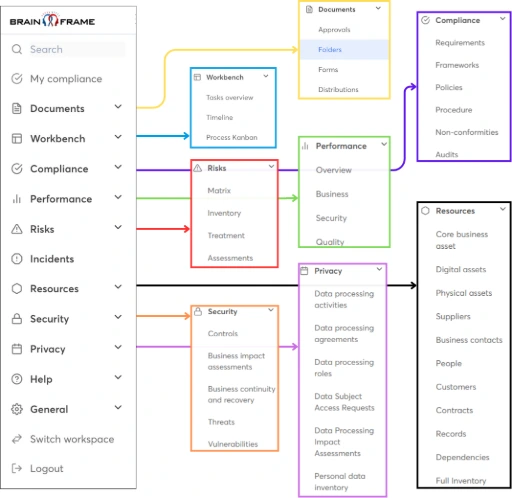
Governance, Risk, and Compliance (GRC) tools play a critical role in helping organizations navigate the heightened cybersecurity risks of the holiday season. Brainframe allows businesses to proactively manage risks, ensure compliance, and maintain operational resilience during this vulnerable period. Here's how:
Tailored Risk Assessment and Management
- Brainframe allows organizations to conduct holiday-specific risk assessments, identifying vulnerabilities such as reduced staffing, increased online activity, and potential vendor weaknesses.
- By evaluating these seasonal risks, businesses can prioritize and address the most critical threats, such as phishing or ransomware, ensuring their defenses are optimized for the holiday period.
Example: A financial institution can use Brainframe to identify risks associated with increased wire transfer requests during the holidays, ensuring stricter verification processes and real-time monitoring.
Monitoring Compliance with Policies
- The platform helps ensure consistent adherence to security policies, even when staff is reduced. Compliance checks monitor critical areas, such as password policies and MFA enforcement.
- Brainfram sends alerts if deviations from established protocols are detected, providing an additional layer of oversight during periods of reduced vigilance.
Automating Reminders and Updates
- Brainframe automates reminders and updates for incident response plans, ensuring that key personnel remain aware of their roles, even during busy holiday schedules.
- Scheduled notifications can remind teams to test backups, review response protocols, or perform pre-holiday system audits.
Example: The tool can automatically notify IT teams to conduct a final vulnerability scan a week before peak holiday traffic.
By integrating Brainframe into their operations, organizations can maintain strong governance, manage risks effectively, and stay compliant, even under the unique pressures of the holiday season. This proactive approach not only minimizes the likelihood of incidents but also ensures rapid recovery should issues arise.
Conclusion
The holiday season, while a time of celebration and increased business activity, is also a period of heightened cybersecurity risks. Vigilance during this time is not optional—it’s essential. Cybercriminals thrive on the unique vulnerabilities that arise during the holidays, exploiting reduced staffing, increased online activity, and distracted employees. By taking proactive steps, such as reinforcing security policies, preparing incident response plans, and leveraging tools like Brainframe, businesses can protect themselves against potential disruptions and ensure smooth operations.
Prioritizing cybersecurity during this critical period is an investment in the trust of your customers, the reputation of your brand, and the continuity of your operations. Don’t leave your organization’s security to chance—equip your team with the tools and knowledge they need to stay one step ahead of cyber threats.
Take action today. Learn how Brainframe GRC can help your organization stay secure this holiday season. Schedule a demo to see how our tailored solutions can support your governance, risk, and compliance needs. Together, let’s make this holiday season safe, secure, and successful.