Many organizations proudly achieve their ISO 27001 certification, yet still face breaches that come from something far less technical: human error. A misplaced click, a weak password, or a casual approach to data handling can undo months of preparation and stacks of documentation.
This highlights a common problem. An ISMS can be strong in documentation but weak in behavior. Policies get validated without being read, training is attended but not put in practice, and security becomes a secondary task rather than an everyday responsibility.
Attackers often exploit habits and shortcuts, not missing clauses in a policy manual. When employees see security as part of their daily work—supported by relevant training, consistent reminders, and clear expectations—the ISMS becomes something that actively reduces risk.
Three questions are worth asking at the start:
- Relevance: Are policies practical for employees in their roles?
- Reinforcement: Are reminders ongoing or limited to audit season?
- Engagement: Do staff feel involved, or are they passive participants?
Addressing these questions is what transforms a binder of policies into a resilient system grounded in human behavior.
The Gap Between Documentation and Reality
Why the Focus on Paperwork
When organizations roll out an Information Security Management System (ISMS), the first instinct is to produce documents. Policies, procedures, and evidence files reassure auditors and create the impression of control. Certifications like ISO 27001 demand them, and stakeholders expect to see them. In short, documentation is the visible proof that a company takes security seriously.
The trouble is that most employees never internalize these documents. Policies can be carefully drafted, cross-referenced, and archived, but that’s all useless if they go unread. Even when staff acknowledge them, the exercise can be little more than a checkbox. Studies and field experience suggest that around 80% of policies are barely understood or remembered after the initial rollout.
A Familiar Example
Consider the password policy. It might demand:
- A minimum of 12 characters
- Symbols, numbers, and case variations
- Regular updates every 90 days
On the ground, though, employees often reuse the same login across multiple systems or default to predictable options like St4rW4rs1. The written standard is there, but the practice? Not so much.
This creates a dangerous illusion of security. On paper, the ISMS looks complete. In reality, attackers exploit the space between documentation and behavior. Phishing, social engineering, and password attacks succeed not because rules don’t exist, but because people don’t follow them.
The lesson is straightforward: documentation is necessary, but not sufficient. An ISMS only delivers real value when policies move beyond the binder and shape how people act in their daily work.
Why Behavior Change is Hard
The most sophisticated ISMS framework can collapse when human behavior doesn’t align with the rules. People naturally gravitate toward convenience. A shortcut that saves a few seconds often wins out over the secure process that takes longer. This isn’t negligence so much as habit. Security rarely feels urgent until something goes wrong (and sometimes even after that).
Cultural Resistance
Another challenge is cultural. Employees may see security as “someone else’s job.” Developers want to ship code faster, sales teams want fewer obstacles when closing deals, and finance departments want simple workflows. If security measures feel like obstacles rather than enablers, people will resist them—quietly ignoring rules or finding ways around them.
Training Without Relevance
Traditional security awareness programs often miss the mark. Annual e-learning modules may tick the compliance box, but they rarely change how employees act in practice. The problem is twofold:
- Generic content that doesn’t reflect the realities of specific roles.
- Poor timing, with lessons delivered once a year and forgotten the next day.
When training isn’t tied to real tasks, staff treat it as useless. The ISMS becomes something abstract, disconnected from what they actually do.
Overload and Fatigue
Finally, there’s the issue of overload. Employees are already buried under processes, dashboards, and emails. Adding lengthy policies on top of that quickly leads to fatigue. Faced with too much detail, many people disengage completely.
The bottom line? Changing human behavior in the context of an ISMS is difficult because people value speed, clarity, and relevance. Without those, policies may exist, but they won’t be followed. Building security habits that feel natural, not forced, is the real challenge here.
Strategies for Real-World Engagement
Employees tune out quickly when they’re forced through irrelevant content. An HR specialist doesn’t care about secure coding, and developers don’t need a crash course in invoice fraud. Tailoring training to specific roles ensures people pay attention because it actually relates to their work.
Keep It Small and Frequent
Security awareness being a once-a-year ritual is near useless. Short, well-timed lessons stick far better than an annual lecture. Think of two-minute videos on phishing or a quick quiz embedded in a team meeting. These small touches are easier to digest and much harder to forget.
Add a Bit of Playfulness
Policies rarely spark conversation, but a phishing simulation will. Gamified elements create buzz and encourage healthy competition:
- Phishing simulations with “caught it before you” bragging rights
- Quick-fire quizzes with a small reward for top scorers
- Leaderboards for teams with the fewest mistakes
Recognize Good Habits
Fear only goes so far before it turns into resentment. Recognition, on the other hand, builds momentum. When staff are praised for reporting a suspicious email or reminded that their vigilance stopped a potential breach, it reinforces the idea that good security is noticed and valued.
Finally, behavior has to be modeled from above. If managers ignore password policies or casually forward sensitive files, nobody else will take the rules seriously. When leadership treats security as part of daily work, employees are more likely to follow.
Embedding Security Into Daily Work
The strongest policies mean little if they depend on memory alone. Security needs to be baked into the tools and workflows people already use. For example, enforcing multi-factor authentication at login or building encryption into file-sharing systems ensures employees don’t have to think twice. The less security feels like an extra step, the more consistently it will be followed.
Automation
Well-timed notifications can be more effective than annual training slides. Automated prompts—like password renewal notifications, alerts when sensitive data is emailed externally, or reminders to lock a laptop—make security part of the rhythm of the workday. These subtle cues help reinforce habits without overwhelming staff.
Employees often notice risks before policies do, but they need an easy way to raise concerns. Clear reporting channels not only surface issues faster but also create a sense of shared responsibility. When staff feel their input matters, they’re more likely to stay engaged.
Shared Responsibility
Embedding security means moving from “IT handles it” to “everyone plays a part.” That shift takes time, but it’s easier when security actions are simple and practical. Companies that succeed tend to:
- Provide quick, accessible reporting tools for incidents or suspicious activity
- Integrate awareness campaigns into existing communication channels
- Make security part of team goals
When employees experience security as part of their daily work rather than an occasional interruption, the ISMS evolves into a living framework that shapes how the organization operates.
Where Brainframe Fits In
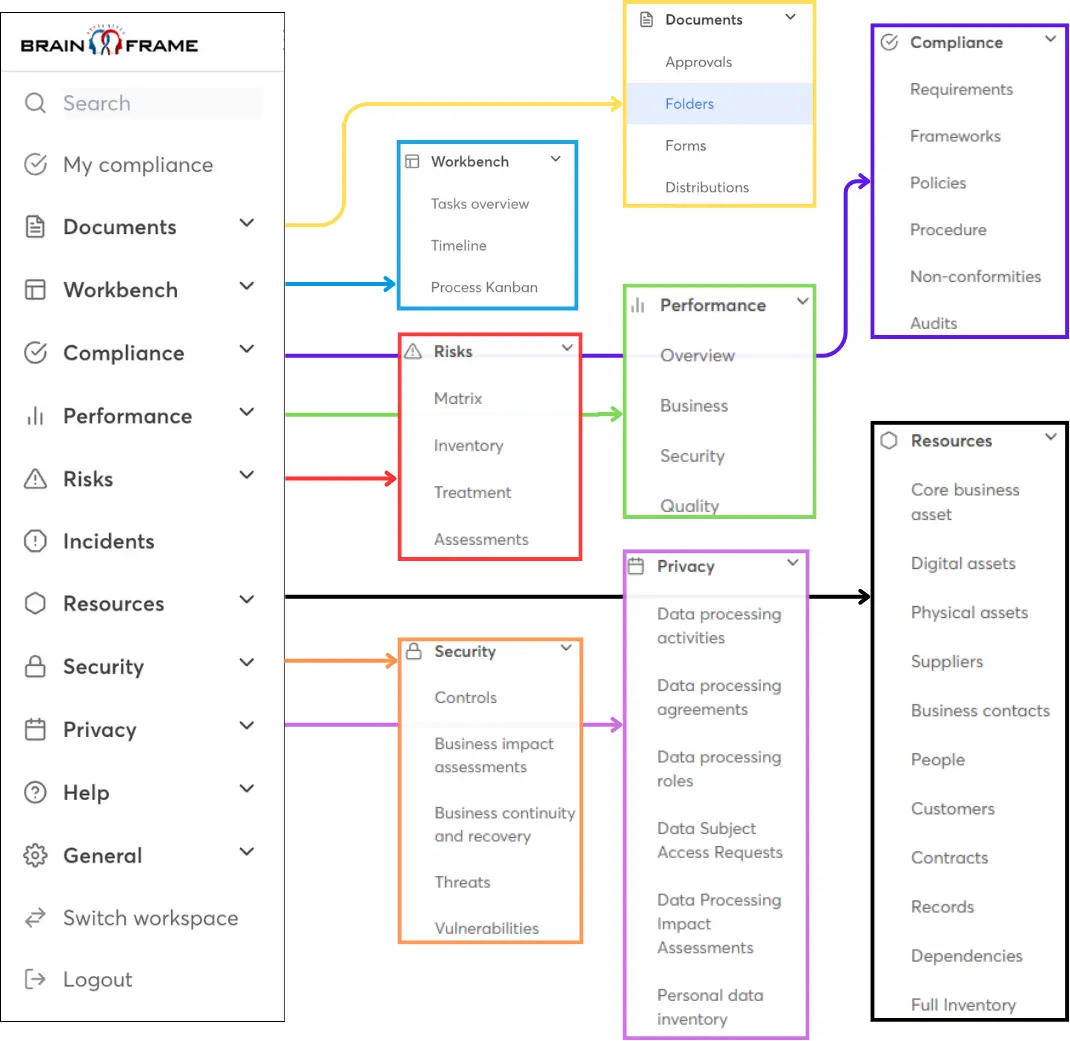
An ISMS only delivers value when it becomes part of daily work. That’s where Brainframe helps bridge the gap. Instead of leaving policies to gather digital dust on a shared drive, Brainframe turns them into living processes that staff actually interact with.
Brainframe allows companies to deliver role-based training directly to the right teams. HR sees content relevant to data privacy, developers get guidance on secure coding, and finance staff learn how to spot invoice fraud.
Reinforcement and tracking
Rather than dropping a 40-page policy once a year, Brainframe supports micro-learning and awareness workflows. Employees receive small, timely reminders, quizzes, or updates that actually stick.
One of the biggest challenges with awareness programs is knowing whether they worked. Brainframe tracks acknowledgments and training completions. Instead of guessing whether staff read a policy, you have audit-ready evidence that they engaged with it.
By combining structure with engagement, Brainframe makes sure the ISMS isn’t just strong on paper but effective in practice. Policies turn into habits, awareness into measurable results, and compliance into something that feels like real risk reduction.